Category: News Trend

Politics, local sports, trending news, and current affairs

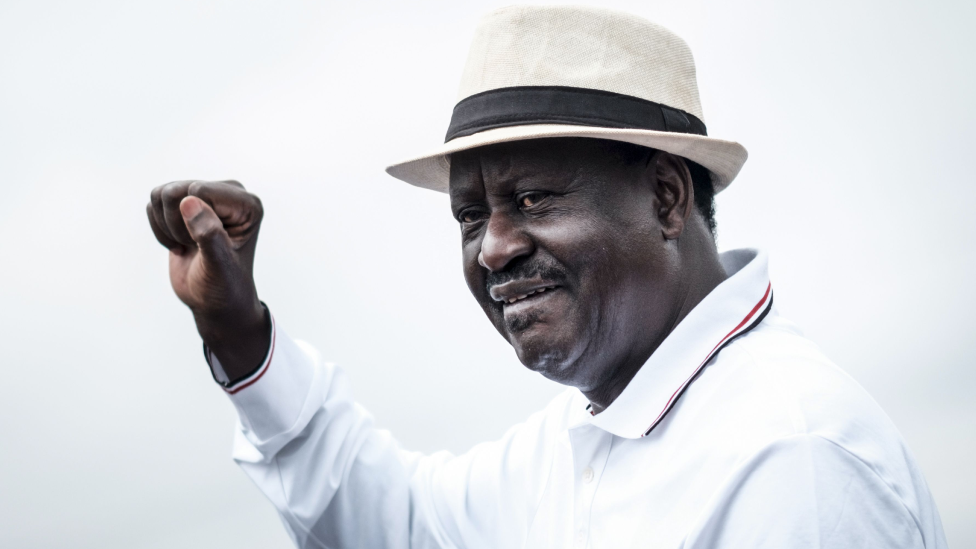
  • Raila Odinga Dies at 80: The Life, Legacy, and Final Chapter of Kenya’s Icon

    Raila Odinga Dies at 80: The Life, Legacy, and Final Chapter of Kenya’s Icon

    Breaking News

    15 October 2025 — In a loss that will resonate across Kenya and beyond, former Prime Minister and veteran opposition leader Raila Amolo Odinga has died at the age of 80, while receiving treatment in Kochi, India. Reuters
    According to Indian media, he suffered a cardiac arrest during a morning walk, was rushed to hospital, and later pronounced dead. @mathrubhumi+1
    This post reflects on his life, contributions, and the legacy he leaves behind.


    Confirmed Death & Circumstances

    • The news was broken by Reuters, citing a source in Odinga’s office. Reuters
    • Indian newspaper Mathrubhumi reported he collapsed during a stroll at an Ayurvedic facility in Kochi and was taken to Devamatha Hospital, where he was declared dead at around 9:52 a.m. local time.

    Early Life & Upbringing

    • Born: January 7, 1945, in Maseno (Kenya). Wikipedia
    • Parents: Son of Jaramogi Oginga Odinga, a key figure in Kenya’s early politics and the country’s first Vice President.
    • Education abroad: He studied in East Germany (then East German institutions) and was trained as an engineer/welder, among other subjects.
    • Early activism & struggle: From his youth he was politically engaged, often challenging authoritarian rule in Kenya.

    Political Career & Influence

    • Parliamentary and ministerial roles: Odinga served in various ministerial roles (Energy, Roads, etc.) and was elected to Parliament.
    • Prime Minister (2008–2013): After the disputed 2007 election and subsequent violence, he entered a power-sharing arrangement and became Kenya’s Prime Minister.
    • Push for constitutional reform: He played a significant role in the campaign for the 2010 Constitution, which brought sweeping reforms to governance, devolution, and rights.
    • Multiple presidential bids: He contested the presidency several times (1997, 2007, 2013, 2017, 2022), often disputing election results and demanding electoral justice.
    • “The Handshake” and later cooperation: In 2018, Odinga and President Uhuru Kenyatta made a political truce, widely known as the “handshake”, which altered Kenya’s political dynamics. Wikipedia
    • Continental ambitions: He was also active beyond Kenyan borders, including a bid to lead the African Union Commission. Wikipedia

    Legacy & Public Impact

    • Odinga was arguably Kenya’s most prominent opposition figure for decades, symbolic of resilience, reform, and the struggle for democracy.
    • His persistence and moral weight lent credibility to calls for transparence, electoral integrity, and constitutionalism.
    • Even for those who disagreed with his politics, many acknowledged his influence on Kenya’s political evolution.
    • His death will prompt reflection on where Kenya goes from here—in terms of leadership, opposition politics, and national unity.

    What Comes Next

    • The government, family, and ODM party will release official statements, funeral plans, and protocols.
    • Repatriation of his body and state burial logistics will be followed intensely by Kenyans.
    • Political realignments, succession within ODM, and reactions from domestic and international figures will be pivotal.
    • Media, historians, and citizens will document and debate his life, achievements, controversies, and what his departure means for Kenya’s future.

  • Kenya Poised to Make Crypto History: VASP Bill Awaits Presidential Assent

    Kenya Poised to Make Crypto History: VASP Bill Awaits Presidential Assent

    Kenya is on the brink of a historic milestone in financial innovation. Parliament has officially passed the Virtual Asset Service Providers (VASP) Bill, 2025, marking the country’s first-ever legal framework for cryptocurrency and digital assets. The bill now awaits President William Ruto’s signature, a final step that will position Kenya among the first African nations to regulate the crypto sector comprehensively.

    Dual Oversight by CBK and CMA

    Once enacted, the new law will empower the Central Bank of Kenya (CBK) and the Capital Markets Authority (CMA) as joint regulators of Kenya’s crypto ecosystem. This dual oversight model aims to create a balanced regulatory environment—one that encourages innovation while ensuring market stability and investor protection.

    The National Treasury Cabinet Secretary will also gain authority to issue detailed regulations on:

    • Stablecoins and tokenization of real-world assets
    • Crypto trading platforms and exchanges
    • Capital and solvency standards
    • Anti-money laundering (AML) and counter-terrorist financing (CTF) compliance

    The Journey to the VASP Bill

    The VASP Bill’s passage follows months of public consultations, expert reviews, and parliamentary debate. Lawmakers confirmed that the final version includes updated provisions on licensing, compliance, and consumer protection, although the complete text is yet to be made public.

    According to industry observers, the legislation will formalize the crypto economy, giving both local and international startups a clear licensing pathway and compliance framework.

    “With Parliament’s passage of the VASP Bill, Kenya is one signature away from making regulatory history,” said Chebet Kipingor, Business Operations Manager at Busha Kenya. “It’s a signal that Africa’s most innovative economy is ready to balance innovation with consumer protection—where progress, not fear, guides our digital future.”

    Why It Matters

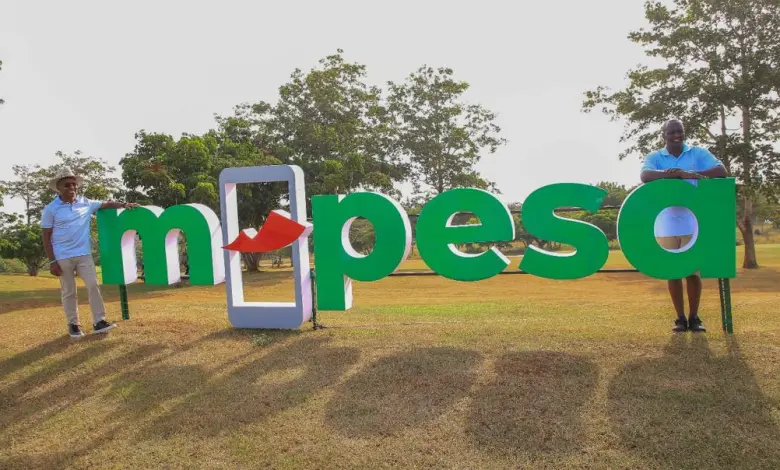
    Kenya has long been recognized as a fintech and mobile money leader, thanks to innovations like M-Pesa. The VASP Bill extends that reputation into the Web3 era, positioning Kenya as a regional hub for blockchain and crypto innovation.

    By introducing a structured framework for virtual assets, Kenya is setting clear standards for:

    • Market integrity
    • Capital adequacy
    • Investor and consumer safeguards

    This could attract major players in the digital asset industry while reducing the risks of unregulated operations.

    The Road Ahead

    Experts warn that the bill’s true impact will depend on how the CBK and CMA enforce the rules. If capital thresholds or compliance demands are set too high, smaller startups may struggle to participate—potentially stifling innovation instead of fostering it.

    Moreover, the legislation comes at a critical moment. The Kenyan government is under pressure to strengthen financial oversight as it seeks removal from the Financial Action Task Force (FATF) greylist and to meet fiscal goals tied to its (now-cancelled) IMF Extended Fund Facility (EFF).

    Next Steps

    Attorney General Dorcas Oduor is currently finalizing the bill for presidential assent. Once signed, the VASP Act will take effect—ushering in a new era for Kenya’s financial markets and setting a benchmark for the future of crypto regulation across Africa.

  • M-PESA Set for Major System Upgrade: What You Need to Know

    M-PESA Set for Major System Upgrade: What You Need to Know

    18 Years of Financial Revolution Continues

    Kenya’s mobile money pioneer, M-PESA, is gearing up for another significant milestone in its journey of transforming financial services across the country. For nearly two decades, this groundbreaking platform has been connecting Kenyans to financial opportunities, and now it’s preparing for its next evolution.

    Scheduled Maintenance: Mark Your Calendars

    Safaricom has announced a crucial system upgrade scheduled for Monday, September 22nd, 2025, running from 12:30 AM to 3:30 AM. This three-hour maintenance window has been strategically chosen during the early morning hours to minimize disruption to daily business activities and customer transactions.

    What to Expect During the Upgrade

    During this maintenance period, M-PESA users should be prepared for:

    • Complete service unavailability – All M-PESA transactions will be temporarily suspended
    • Airtime purchase restrictions – Mobile airtime top-ups through M-PESA will also be affected
    • No mobile money transfers – Person-to-person transfers, bill payments, and merchant transactions will be paused

    Why This Upgrade Matters

    This system upgrade represents Safaricom’s ongoing commitment to delivering “always on, safe, secure, and worry-free financial products and services.” As Kenya’s digital financial landscape continues to evolve, these technical improvements are essential for:

    • Enhanced security measures
    • Improved system reliability
    • Better user experience
    • Preparation for future financial innovations

    Planning Ahead: Tips for M-PESA Users

    To avoid any inconvenience during the upgrade window:

    1. Complete urgent transactions before midnight on September 21st
    2. Keep alternative payment methods handy for early morning needs
    3. Plan ahead for any essential payments or transfers
    4. Check for service restoration after 3:30 AM on September 22nd

    A Testament to Continuous Innovation

    This upgrade reflects M-PESA’s dedication to staying at the forefront of financial technology. Since its launch, the platform has revolutionized how Kenyans access and manage money, from rural villages to urban centers. Each system improvement builds on this legacy of innovation and financial inclusion.

    Looking Forward

    While the temporary inconvenience may affect some users, this upgrade is a necessary step toward ensuring M-PESA continues to provide the reliable, secure financial services that millions of Kenyans depend on daily.

    Safaricom’s proactive approach to system maintenance demonstrates their commitment to customer service and technological excellence. As the company continues to evolve its offerings, users can expect even better performance and new features in the enhanced system.


    Stay tuned for updates on the completion of the upgrade and any new features that may be introduced. For the latest information, follow official Safaricom communications channels.

  • Is the Internet in Danger of Becoming ‘Dead’? Exploring the Rise of Bot and AI Content Online

    Is the Internet in Danger of Becoming ‘Dead’? Exploring the Rise of Bot and AI Content Online

    The internet has always been a place for human connection, creativity, and information-sharing. But in 2025, many are asking a chilling question: Is the internet becoming “dead”? This idea, known as the Dead Internet Theory, suggests that much of the content we see today isn’t made by people at all — but by bots and AI systems.

    What Is the Dead Internet Theory?

    The Dead Internet Theory argues that a huge portion of online content is automated. Instead of posts, articles, or videos created by real humans, bots and AI programs are increasingly producing what fills our feeds, search results, and even comment sections.

    While once a fringe concept, the theory feels more real as AI text, image, and video generators become mainstream. From product reviews that don’t sound quite right, to endless streams of recycled news and fake profiles on social media — it’s getting harder to tell what’s authentic.

    How Bots and AI Are Changing Online Content

    1. AI-Generated Articles and Blogs
      News sites, marketing teams, and even scammers are pumping out thousands of AI-written articles daily. Some are polished, while others contain errors or misleading details, but they flood search results either way.
    2. Fake Social Media Engagement
      Bots boost likes, shares, and comments, creating a false sense of popularity around certain topics, products, or even political messages.
    3. Deepfakes and Synthetic Media
      Videos and images generated by AI blur the line between truth and fiction, making misinformation campaigns far easier to execute.
    4. Search Engine Pollution
      AI spam sites are cluttering Google and other search platforms, forcing companies to improve detection tools and leaving users frustrated with irrelevant results.

    Why This Matters for Trust in Media

    If much of what we see online is fake, manipulated, or generated without human thought, trust becomes the biggest casualty. People may start questioning whether anything online is real — from news articles to product reviews. This erosion of trust threatens journalism, honest businesses, and the social fabric of the internet itself.

    Are We Really Facing a “Dead” Internet?

    While the web isn’t truly “dead,” it is flooded. The challenge for the next few years will be separating authentic voices from automated noise. Search engines, social platforms, and governments are all scrambling to develop ways to verify content sources.

    At the same time, human communities — forums, niche groups, and authentic creators — still thrive. The internet may not be dead, but it’s evolving into a space where being able to spot AI and bot-driven content is just as important as finding what you’re looking for.

    Final Thoughts

    The rise of bots and AI content doesn’t mean the end of the internet, but it does signal a new era. Users must learn to navigate an online world where not everything is what it seems. The future of a “living” internet depends on transparency, verification tools, and the continued presence of authentic human voices.

  • How AI Policy Is Rapidly Evolving — What Everyone Should Know in 2025

    How AI Policy Is Rapidly Evolving — What Everyone Should Know in 2025

    Artificial Intelligence is no longer just a buzzword — it’s shaping economies, governments, and our daily lives. But as AI tools become more powerful and accessible, lawmakers are racing to keep up. The year 2025 has already seen heated debates about how AI should be regulated, balancing innovation with safety and ethics.

    Why AI Policy Matters Now

    AI systems are powering healthcare diagnostics, financial predictions, education tools, and even government decision-making. With such influence, the way AI is controlled affects not just tech companies but society at large. Policies drafted today will determine whether AI remains a force for good or becomes a source of unchecked risk.

    Privacy Concerns

    One of the top issues is data privacy. AI thrives on massive datasets, often containing sensitive personal information. Policymakers are questioning how much access companies should have, how long data should be stored, and what rights users should have to delete or control their data.

    Bias and Fairness

    AI bias is another hot-button topic. Algorithms have been shown to reflect — and sometimes worsen — racial, gender, and socioeconomic biases. Governments are exploring ways to enforce transparency in AI decision-making, requiring audits and accountability when systems unfairly discriminate.

    The Misinformation Problem

    Generative AI has made it easier than ever to create fake news, deepfakes, and misleading content at scale. Lawmakers are struggling with how to curb AI-driven misinformation without undermining free speech. Some proposals involve mandatory watermarks or detection systems for AI-generated content.

    Global Approaches to AI Regulation

    • United States: Pushing sector-specific regulations while relying heavily on private industry standards.
    • European Union: Advancing the AI Act, a comprehensive set of rules classifying AI uses by risk level.
    • China: Tightening control by monitoring both AI tools and the content they produce.

    This fragmented landscape means companies working internationally must adapt to multiple, sometimes conflicting, sets of rules.

    What’s Next?

    Experts believe that in 2025, we’ll see more emphasis on:

    • AI safety testing before deployment.
    • Cross-border agreements to prevent misuse of AI in cyberwarfare or disinformation.
    • Stronger penalties for companies that fail to meet ethical or security standards.

    Final Thoughts

    AI is evolving fast — and so is the conversation around its governance. Whether you’re a developer, policymaker, or everyday user, understanding these shifts is essential. The way we regulate AI today will shape not only the technology but the future of human society.

  • Charlie Kirk: What We Know About His Death and the Ongoing Investigation

    Charlie Kirk: What We Know About His Death and the Ongoing Investigation

    A tragic scene unfolded at Utah Valley University (UVU) on Wednesday when conservative commentator and activist Charlie Kirk was fatally shot during a public speaking event. The 31-year-old, known for his outspoken support of former President Donald Trump and leadership of the youth group Turning Point USA, was addressing a crowd when the incident occurred.

    The Shooting

    Witnesses reported that Kirk was seated at his “Prove Me Wrong” debate table, engaging with students, when a gunshot rang out. Video footage shows him clutching his neck before collapsing, causing panic among the estimated 3,000 attendees. Only a single round was fired, and no one else was injured.

    Authorities later discovered a bolt-action rifle in nearby woods. According to investigators, the weapon contained unused ammunition engraved with messages referencing transgender and antifascist ideologies.

    Where It Happened

    The attack took place in UVU’s courtyard, about 40 miles south of Salt Lake City. Officials believe the shot came from the roof or an open window of the Losee Center, a campus building located roughly 100–200 yards from the event site.

    Who Was Charlie Kirk?

    Kirk rose to prominence as the cofounder of Turning Point USA at just 18 years old. Over the years, he became one of the most recognizable figures in conservative politics, amassing millions of followers online and hosting The Charlie Kirk Show.

    He built close ties with Donald Trump and his circle, frequently appearing on Fox News and helping mobilize young voters for the Republican Party. His influence was felt far beyond media, often sparking heated debates on issues like race, gender, immigration, gun rights, and abortion.

    Though admired by many on the right, Kirk was also a divisive figure. His comments on Black Americans, Islam, Gaza, and women’s rights often drew sharp criticism and controversy.

    The Suspect

    The shooter remains at large. Utah’s Department of Public Safety reported that investigators tracked the suspect’s movements onto campus, up stairwells, and eventually onto the roof before escaping into a nearby neighborhood. Authorities believe the individual is of college age and say they have strong video evidence.

    On Thursday, the FBI released surveillance images of a man in dark clothing and sunglasses, identifying him as a “person of interest.”

    Reaction and Aftermath

    Utah Governor Spencer Cox described the killing as a “political assassination,” calling it a dark day for both the state and the nation.

    President Trump echoed this sentiment, lowering flags nationwide in Kirk’s honor and denouncing what he called “the dangerous rhetoric of the radical left.” In a video statement, Trump mourned Kirk as a patriot and warned that demonizing opponents contributes to political violence.

    Meanwhile, Utah Valley University has closed its campus until September 14 as the investigation continues.